How to Declutter Your Nature Photography Compositions
Nature photography is full of creative “rules” and compositional guidelines—rule of thirds, leading lines, framing, foreground interest, and more. While these tools can help you craft stronger images, there is one simple guideline that often matters even more: declutter your compositions.
Whether you’re photographing vast landscapes, intimate nature scenes, or close-up details, simplifying your nature photography compositions is one of the most powerful ways to increase impact, create visual flow, and communicate your artistic message clearly. Busy scenes easily overwhelm the viewer, while clean compositions with only the essential elements pull the viewer in and guide them effortlessly.
In this article, you’ll learn how to simplify your nature photography, what minimalism can do for your creative growth, and five practical techniques to help you declutter your images both in camera and during post-processing. This guide includes long-tail SEO keywords such as how to simplify nature photography compositions, tips for decluttering landscape photos, minimalist nature photography techniques, and how to reduce distractions in outdoor photography.
Why Simplicity Matters in Nature Photography
You’ve probably heard the saying that photography is about subtraction rather than addition. In painting, the artist starts with a blank canvas and adds elements intentionally. Nature photographers begin with a complex environment and must decide what to remove, what to include, and what to emphasize.
Minimalist compositions aren’t just aesthetically pleasing—they are creatively liberating. By stripping your scene down to only what matters most, you strengthen your vision and develop a deeper understanding of visual storytelling. Minimalism doesn’t mean photographing less—it means photographing with intention.
A simple composition with clean lines, negative space, and limited distractions often feels more peaceful, dramatic, or contemplative. The emotion you felt in nature translates more directly to your image. A cluttered image dilutes the story. Too many competing elements confuses the viewer. The subject gets lost. And without a clear point of focus, the emotional connection diminishes.
On the other hand, simple compositions with only a few strong elements often have more visual impact, clarity, and emotional intensity. They help your viewer feel the mood you experienced in the moment rather than getting lost in unnecessary details.
This philosophy applies everywhere:
- busy forests
- rocky shorelines
- mountain vistas
- desert landscapes
- beaches with scattered driftwood
- even macro photography subjects
By learning to declutter your scenes, you elevate your storytelling and create photographs that are more artistic, intentional, and memorable.
Below are practical techniques you can apply today to simplify your nature photos and eliminate distractions.
1. Change Your Perspective
One of the easiest and most effective ways to declutter your composition is simple: move.
Unwanted elements—bright leaves, branches, rocks, signs, people, cars, or sky highlights—can often be removed from the frame by shifting your viewpoint.
Try:
- Moving closer to eliminate objects on the edges
- Lowering your angle to hide distractions behind your main subject
- Stepping to the left or right to avoid bright or busy backgrounds
- Using a higher angle to place your subject against clean ground textures
- Isolating subjects by photographing them against water, sand, or empty sky
Changing your perspective helps you refine your composition before you even click the shutter.
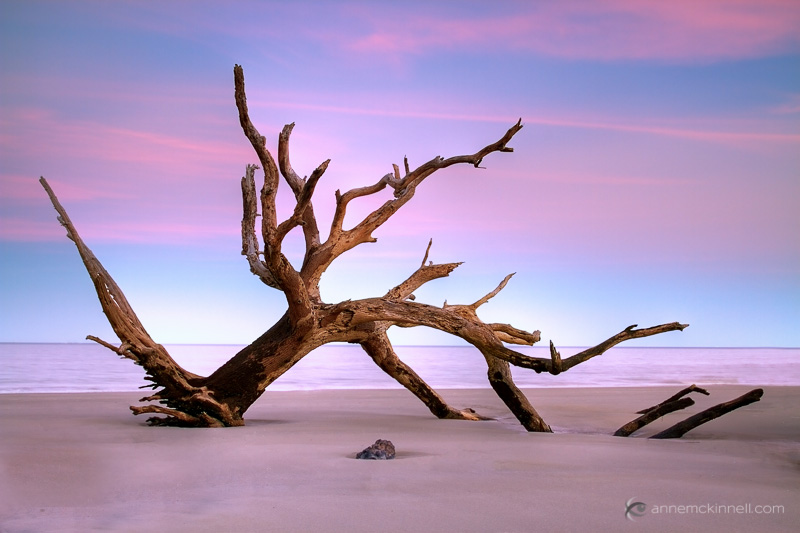
Simple composition free of distraction at Driftwood Beach by Anne McKinnell
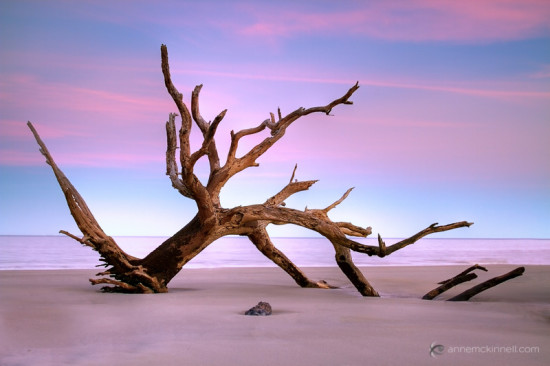
Driftwood beaches often contain scattered logs, footprints, seaweed, and rocks. By moving just a few feet and adjusting your angle, you can isolate a single piece of driftwood against smooth sand and create a cleaner, more powerful composition.
2. Blur the Background in Nature Photography Compositions
A cluttered background is one of the biggest challenges in nature photography, especially when working with flowers, wildlife, or forest scenes.
Using a wide aperture such as f/2.8, f/4, or f/5.6 creates a shallow depth of field, allowing you to blur the background and reduce visual noise. This technique is particularly effective when there is significant distance between your subject and the background.
This approach:
- isolates your subject
- softens distracting elements
- adds a dreamy quality to intimate landscapes and macro scenes
- helps the viewer focus on what matters most

Using blur to simplify nature photography composition – Cherry Blossoms by Anne McKinnell
In an image of cherry blossoms, a house behind the flowers could easily become a distraction. But by using a wide aperture, I blurred the background so the blossoms remained the main point of interest.
3. Convert to Black and White
Color can be both an asset and a distraction. When vibrant colors compete with your subject, the viewer may be pulled away from your focal point.
Converting an image to black and white can be a powerful way to:
- simplify the composition
- remove distracting color contrasts
- emphasize shapes, textures, and patterns
- enhance mood
Black and white photography lets you focus on the structural elements of your scene without the influence of color.
4. Check the Edges of Your Frame
One of the most overlooked composition techniques is checking the edges of your frame. Even small intrusions—half a branch, a clipped leaf, a rock sticking in, or an object barely touching the border—can disrupt the harmony of the scene.
Before pressing the shutter, scan the perimeter of your image and ask:
- Is anything accidentally touching the edge?
- Is anything half-in, half-out of the frame?
- Would the image be stronger if I moved slightly to include or exclude the object entirely?
Clean edges create a more polished, intentional composition.
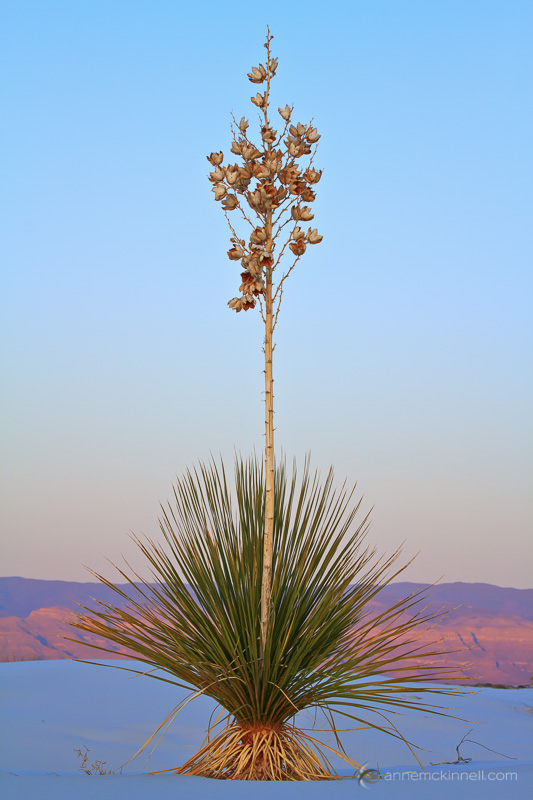
Simple nature photography composition with clean edge – Yucca at White Sands National Monument by Anne McKinnell
In a desert scene like the Yucca at White Sands National Monument, including stray branches or footprints at the edges would disrupt the simplicity. Removing or reframing those distractions strengthens the visual story.
5. Clone It Out During Post-Processing
Sometimes, even with careful planning, distracting elements are unavoidable—especially in busy or crowded nature settings.
This is when post-processing tools such as the clone stamp, healing brush, and content-aware fill become invaluable.
You can:
- remove stray branches
- erase sensor spots
- eliminate unwanted footprints
- clean up messy backgrounds
- remove intrusive objects on the frame edge
While the goal is to get your image right in camera, post-processing allows you to achieve the clean, distraction-free result you envisioned.
Start Wide, Then Simplify
A helpful approach when arriving at any scene is to:
- Start wide and photograph everything.
- Identify the element that captured your attention.
- Gradually remove everything that doesn’t contribute to the story.
- Refine your framing by getting closer with your feet or a telephoto lens.
- Pay close attention to your background and edges.
When I came across this vintage car and trailer in New Mexico I was excited about the subject, but the problem was what to do with the other RVs in the background.
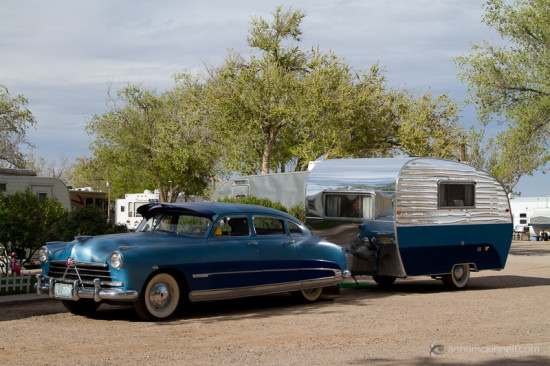

Vintage car with a wide angle view in New Mexico by Anne Mckinnell
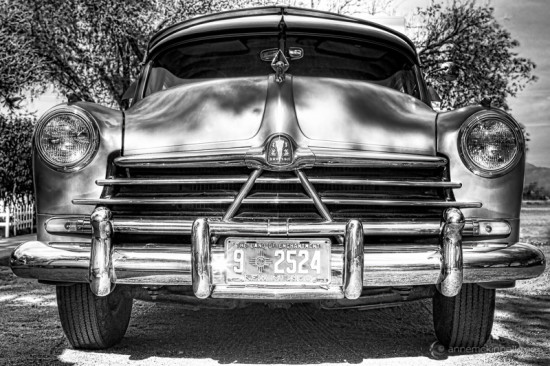
Simplified photography composition with a different perspective – Vintage car in New Mexico by Anne Mckinnell
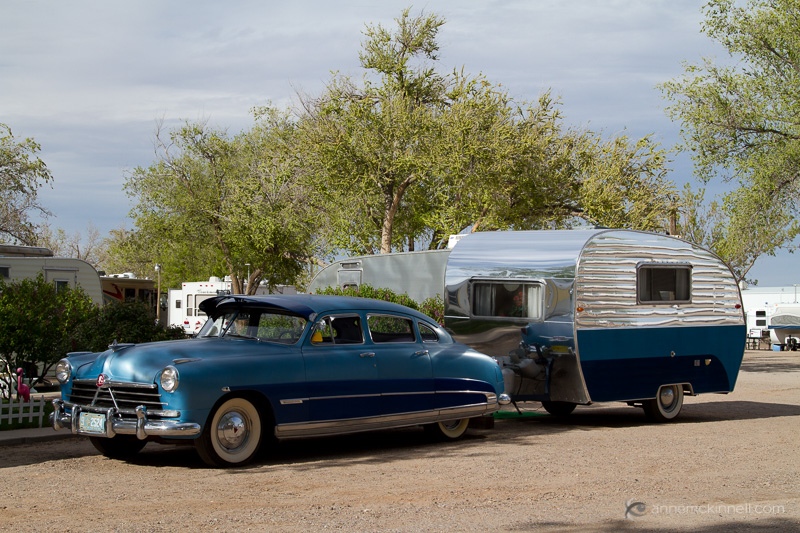

I applied three decluttering techniques:
- Changed my perspective to hide the RVs behind the car (sacrificing the trailer).
- Used a wide aperture to soften the remaining background.
- Converted the image to black and white to remove distraction from bright green trees.
The result? A more timeless, simplified, and artistic photograph.
By progressively narrowing your focus, you train your eye to see the essential elements and eliminate the rest.
Summary
Decluttering your nature photography compositions is one of the most effective ways to create stronger, more compelling images. By simplifying your scenes, removing distractions, and focusing on your core subject, you create clarity, emotion, and visual impact.
Minimalist compositions benefit nature photographers by enhancing storytelling, strengthening compositional skills, and making their images more memorable.
The five key techniques to simplify your nature photography compositions include:
- changing your perspective
- blurring the background
- converting to black & white
- checking the edges of your frame
- cloning out distractions in post-processing
Decluttering your compositions—whether in the field or in post-processing—helps you create images that feel intentional, bold, and artistically expressive.
Conclusion
Nature photography can often feel overwhelming because the outdoors is inherently complex. A forest contains thousands of branches. A shoreline has endless rocks and textures. Mountains are layered with patterns, colors, and distractions.
But the key to powerful nature photography is not capturing everything—it’s capturing the right things.
By decluttering your compositions and embracing minimalism, you create photographs that tell a clear story, evoke emotion, and reflect your artistic vision. Whether you’re shooting landscapes, wildlife, macro images, or intimate scenes, simplifying your compositions will help you elevate your nature photography to a new level.
Clean, intentional, minimalistic images stand out—and they allow your viewers to truly experience the beauty you saw in that moment.
If you want your nature photography to have more impact, start by removing what doesn’t belong. Subtract until only the essentials remain.
Original Article Published in May 2016.
About Author Anne McKinnell

Anne McKinnell is a photographer, writer and nomad. She lives in an RV and travels around North America photographing beautiful places and writing about travel, photography, and how changing your life is not as scary as it seems.
You can read about her adventures on her blog and be sure to check out her free photography eBooks.