Mastering Tonal Opportunities in Black and White Nature Photography
Black and white nature photography has a timeless way of revealing the essence of a landscape. By stripping away color, photographers are encouraged to look beyond surface beauty and focus on the fundamentals—structure, contrast, tonal separation, texture, and mood. Without the pull of vibrant hues, compositions rely on the interplay of light and shadow, guiding the viewer toward the emotional depth of a scene.
Whether you are just beginning to explore black and white nature photography or you’re an experienced landscape photographer refining your creative vision, monochrome work challenges you to slow down, observe more intentionally, and interpret the environment with a heightened sense of clarity.
In this guide, we’ll explore how to identify strong black and white opportunities in the natural world, which types of scenes translate beautifully into grayscale, and how to approach any landscape with a mindset centered on tonal contrast, texture, atmosphere, and expressive composition. To bring these concepts to life, we’ll look at examples photographed in Hocking Hills State Park in Ohio, a place filled with waterfalls, sandstone gorges, forested canyons, and intimate natural details—each offering a perfect case study for monochrome compositions.
Visual Opportunities in Black and White Nature Photography
Every landscape offers its own visual gifts for monochrome work—you simply have to slow down long enough to see them. When shooting in black and white, your mindset naturally shifts. Instead of chasing bold color or dramatic skies, you begin searching for:
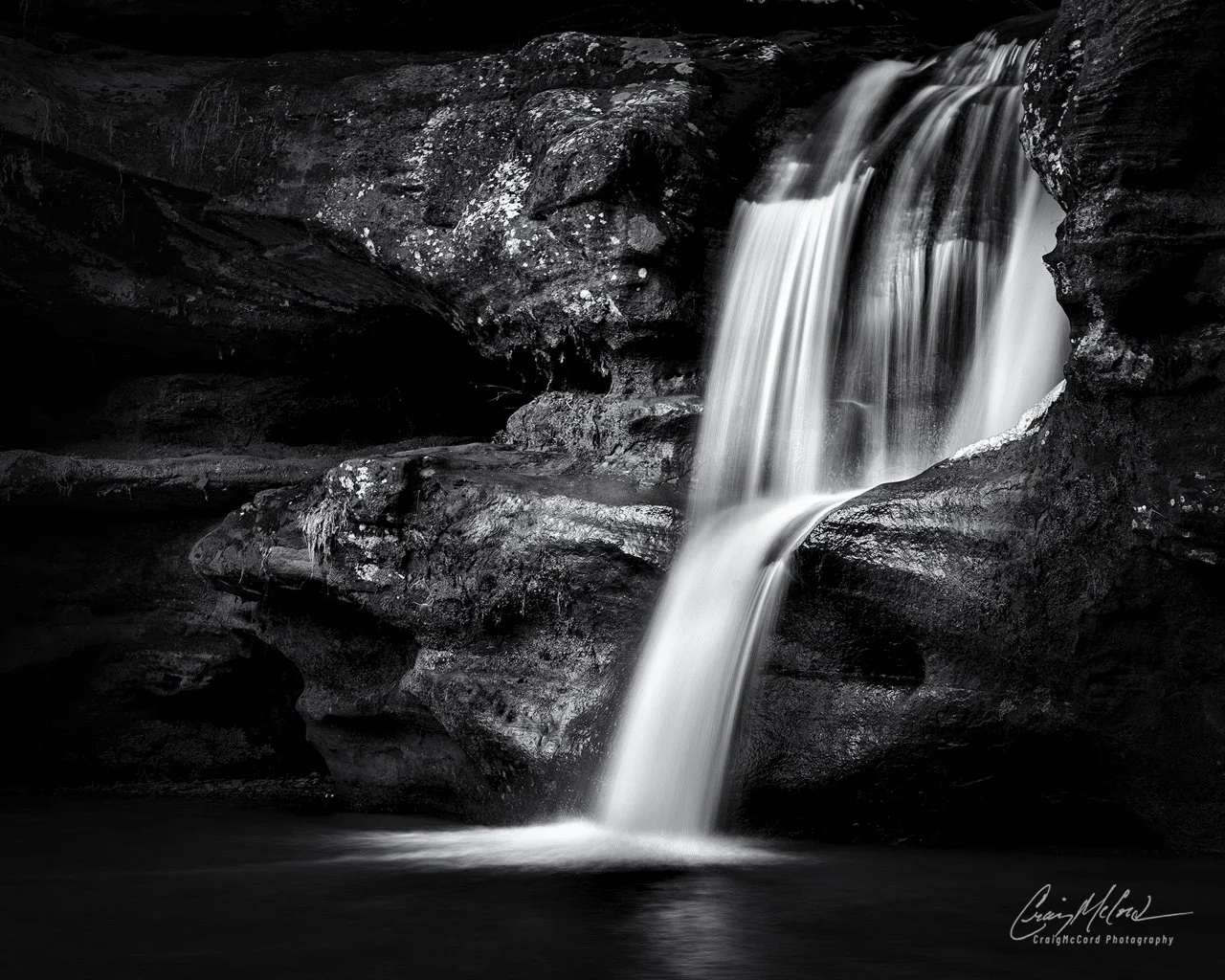
Waterfalls at Hocking Hills in Black and White by Craig McCord
- Strong structure and form
- Contrast between light and shadow
- Tonal separation across the scene
- Texture that helps tell the story
- Mood created by weather, light, and atmosphere
These elements exist everywhere—from mountain ranges to quiet forests to the smallest details on the forest floor.
To illustrate these ideas in practical terms, let’s explore how they come to life in one particularly rich location: Hocking Hills State Park.
Waterfalls: A Perfect Monochrome Starting Point
Waterfalls often translate beautifully into black and white because they naturally create tonal contrast. The brightness of water against surrounding rock and forest shadows gives you a clear visual anchor.
This concept holds true whether you’re photographing waterfalls in the Pacific Northwest, Iceland, the Smokies—or Hocking Hills.
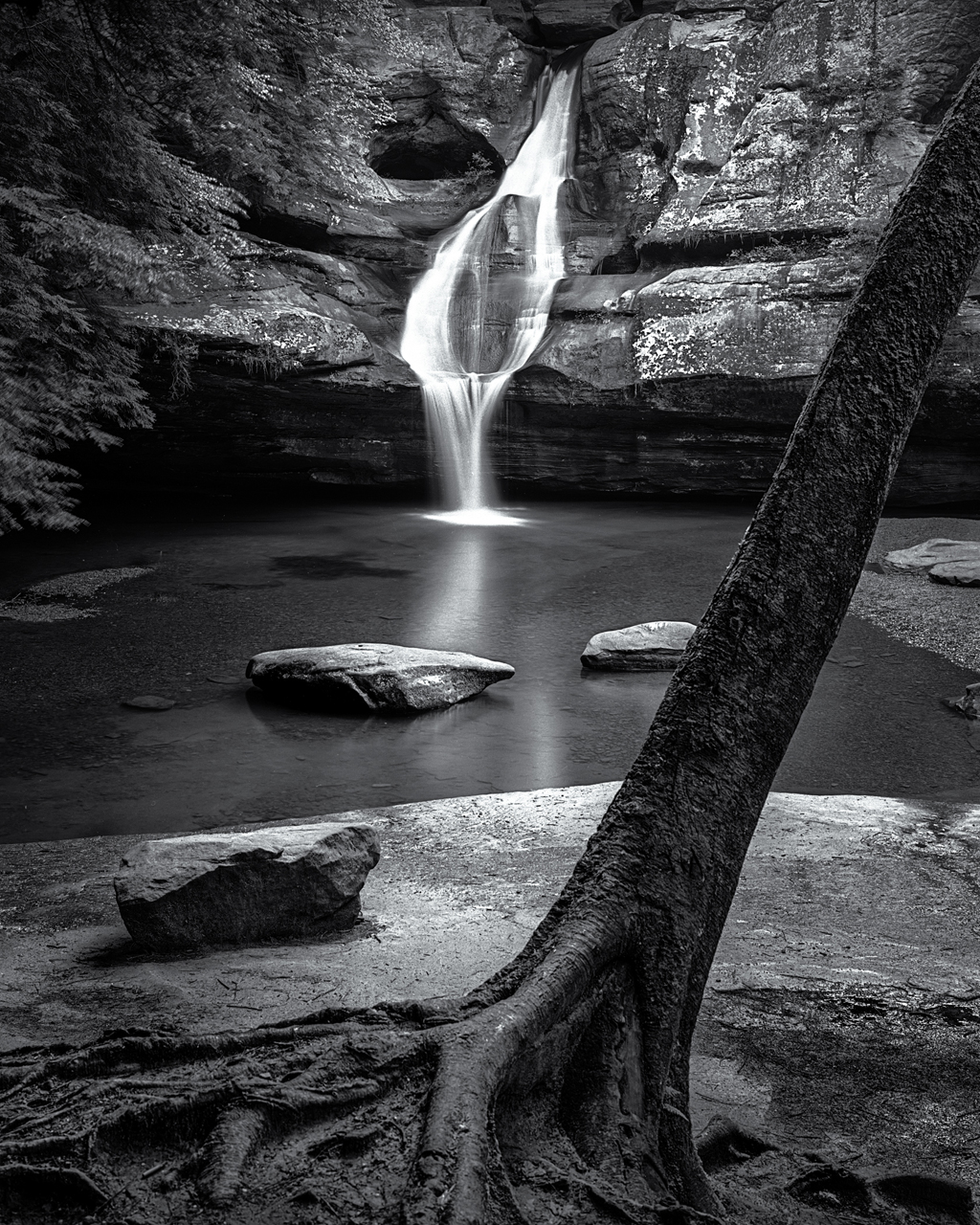
Black and White Nature Photography at Cedar Falls, Hocking Hills, Ohio by Craig McCord
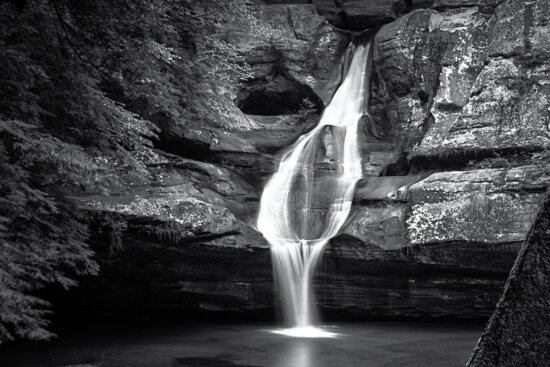
Cedar Falls is a wonderful illustration of how black and white distills a scene down to its structural elements. Smooth water glows softly against dark sandstone. Exposed roots creep across the foreground. Shadows pool in the corners, adding depth and mystery.
When photographing waterfalls in black and white—anywhere, not just Hocking Hills—consider how shutter speed shapes the mood:
- Long exposures create soft, glowing ribbons of water and emphasize calmness.
- Short exposures capture texture and energy in the flow.
- Medium exposures give both motion and detail, offering tonal variety.
Whenever water moves through rock, cliffs, or forest, monochrome photography allows you to transform the scene into a study of contrast, luminosity, and shape.
Forest Scenes: Subtle Tonal Potential Everywhere
Forests are full of monochrome opportunities—subtle, delicate, and full of tonal nuance. Without greens dominating the frame, you’re free to explore how light behaves inside a canopy.
Look for scenes where:
- A single beam of light touches a tree trunk
- Fog softens the background
- Leaves reflect a soft glow
- Shadows create repeating shapes
- Fallen logs and mossy stones add tonal depth
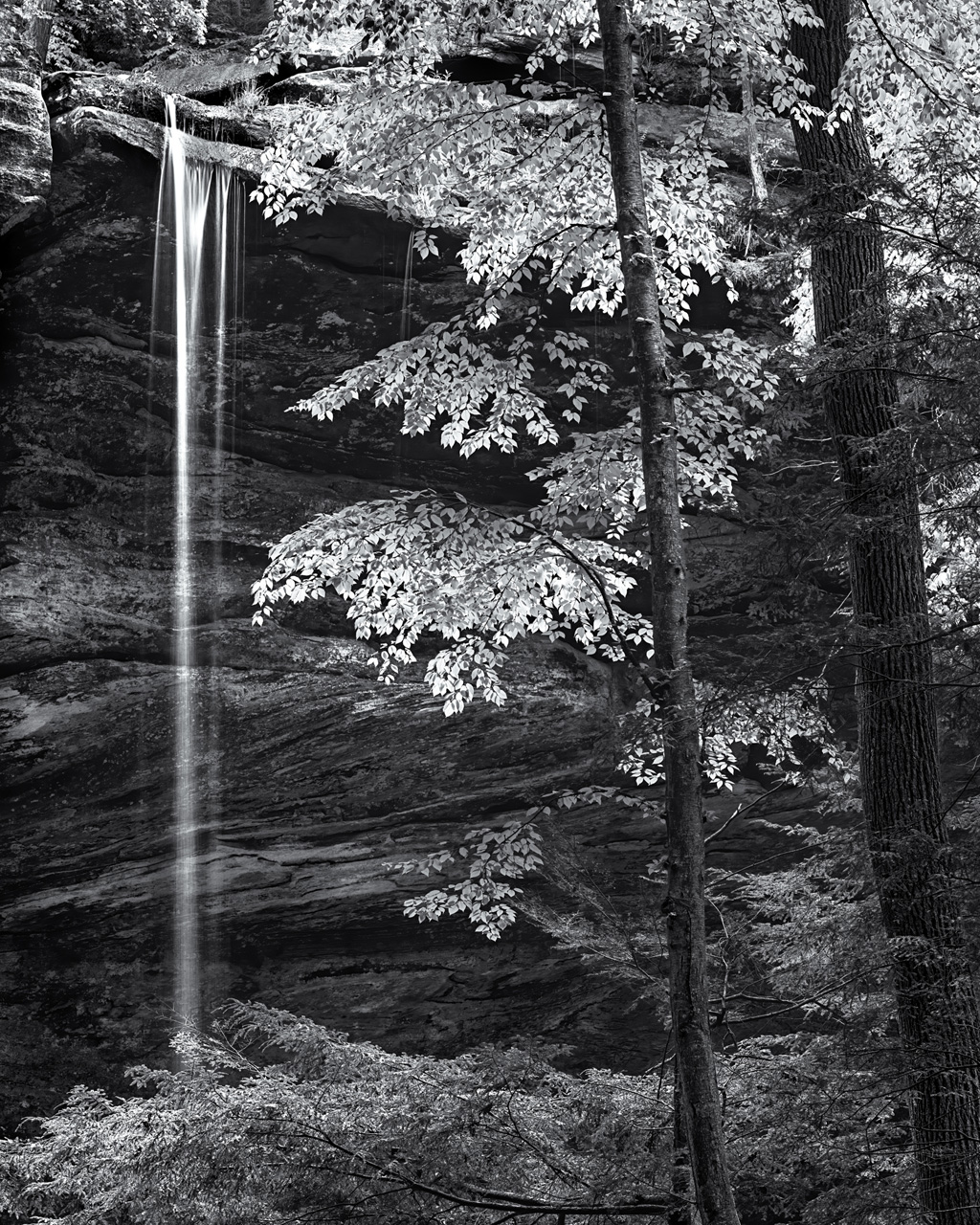
Morning light provided a back light glow to Sweet birch trees framing Ash Cave Falls, Ohio by Craig McCord
In Hocking Hills, these moments appear often along trails like Old Man’s Cave or Conkles Hollow—but the same applies to any forest worldwide. Black and white helps emphasize quiet moments of illumination that color images sometimes bury beneath saturated greens.
Intimate Landscapes: Small Scenes With Big Tonal Character
Intimate landscapes are one of the most powerful ways to practice black and white nature photography. These are the small, close-up scenes that rely heavily on texture and form.
Examples include:
- A curled leaf resting on stone
- Patterns in sandstone or granite
- Smooth river stones reflecting soft light
- Tree bark peeling in ribbons
- Roots gripping rock
- Moss-covered ledges creating tonal layers
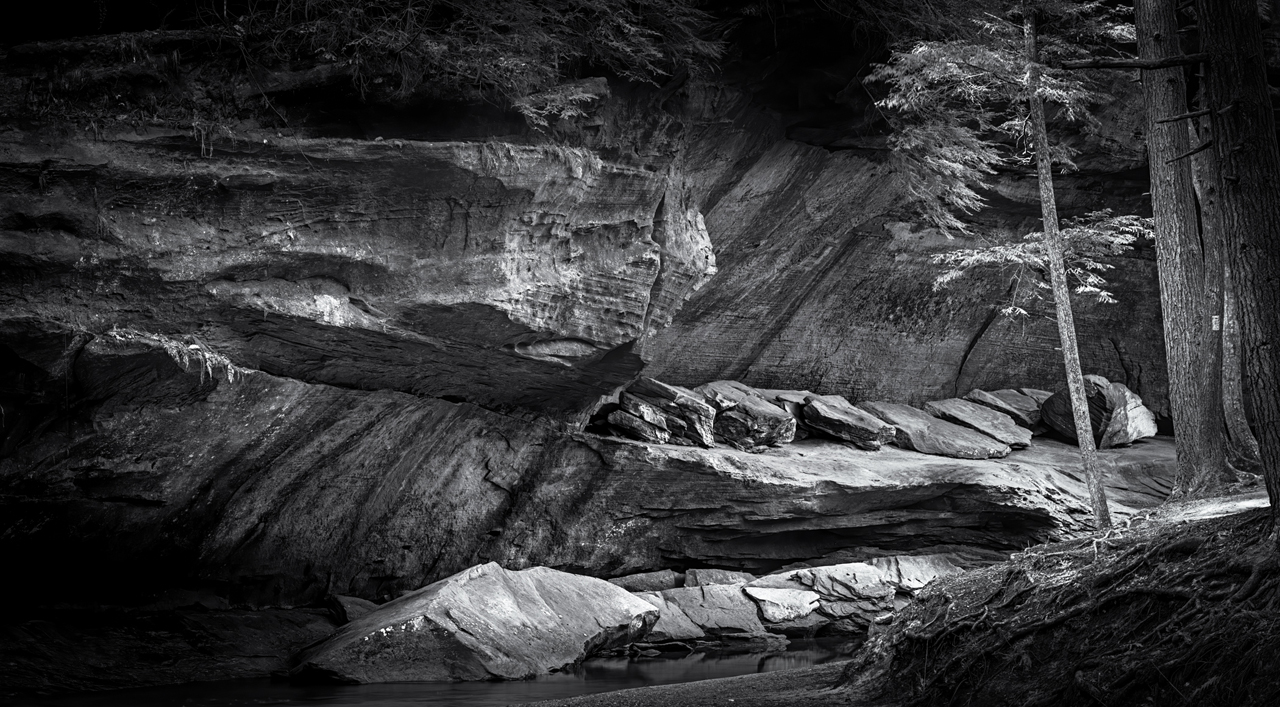
Black and White Nature Photography Example: Intimate scene at Old Man’s Cave Creek, Hocking Hills, Ohio by Craig McCord
In the example above from Hocking Hills, notice how light grazes the sandstone, revealing texture without overpowering it. This type of side-lighting is something you can look for anywhere.
Black and white is uniquely suited to intimate scenes because the lack of color allows texture, structure, and tonal complexity to take center stage. These small details often tell deeper stories than sweeping vistas.
Atmospheric Conditions Are Your Best Friend
Fog. Rain. Overcast skies. Soft, diffuse light.
These are ideal conditions for black and white nature photography—not limitations.
Atmospheric conditions help you:
- Reduce harsh contrast
- Eliminate distracting highlights
- Reveal subtle tonal gradients
- Add emotional mood
- Draw the viewer deeper into the scene
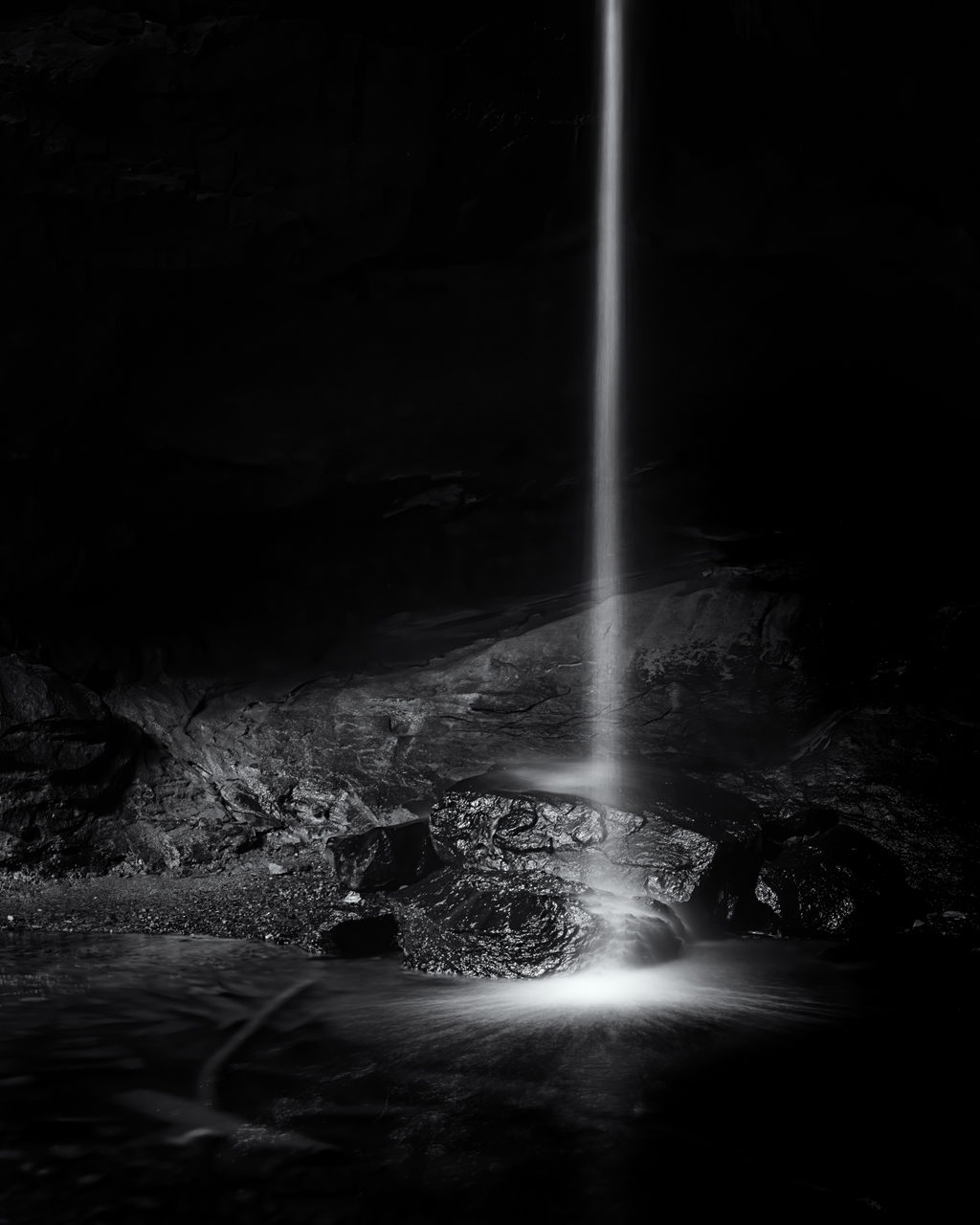
Rainy and misty morning made for a dim lighting of the small waterfall at the end of Conkles Hollow lower trail.
The Conkles Hollow example above happened on a misty morning—exactly the type of weather many photographers avoid. But mist creates mood, rain enhances textures, and overcast light smooths harsh transitions.
Whether you’re photographing a mountain valley, a coastal shoreline, or a Midwestern gorge, soft weather often produces the strongest monochrome results.
How to Approach Any Location With a Monochrome Mindset
Regardless of the landscape you’re exploring, shooting in black and white means shifting your thought process from color to tone.
Here’s what to look for in any location:
1. Tonal Contrast
Contrast guides the viewer.
- Does the subject stand apart from the background?
- Light tree trunks against dark cliffs?
- Bright water against shadowed stone?
2. Texture
Texture becomes a narrative tool in monochrome. Texture tells the story of the landscape. Think:
- Weathered bark
- Cracked rock
- Flowing water
- Grasses in soft wind
- Lichen, moss, or roots
3. Shape and Geometry
Shape becomes even more powerful when color disappears. Look for strong lines and patterns:
- Diagonal logs
- Curving streams
- Layered cliffs
- Branch patterns
- Repeating forms
4. Mood
Monochrome thrives on mood—soft, dramatic, mysterious, peaceful.
- Ask: What emotion does this scene express?
5. Light Direction
Light is your paintbrush in black and white.
- Side light for texture.
- Front light for clarity.
- Backlight for glow and atmosphere.
Case Study: Why the Decaying Tree Trunk
This tree trunk example illustrates universal monochrome principles:
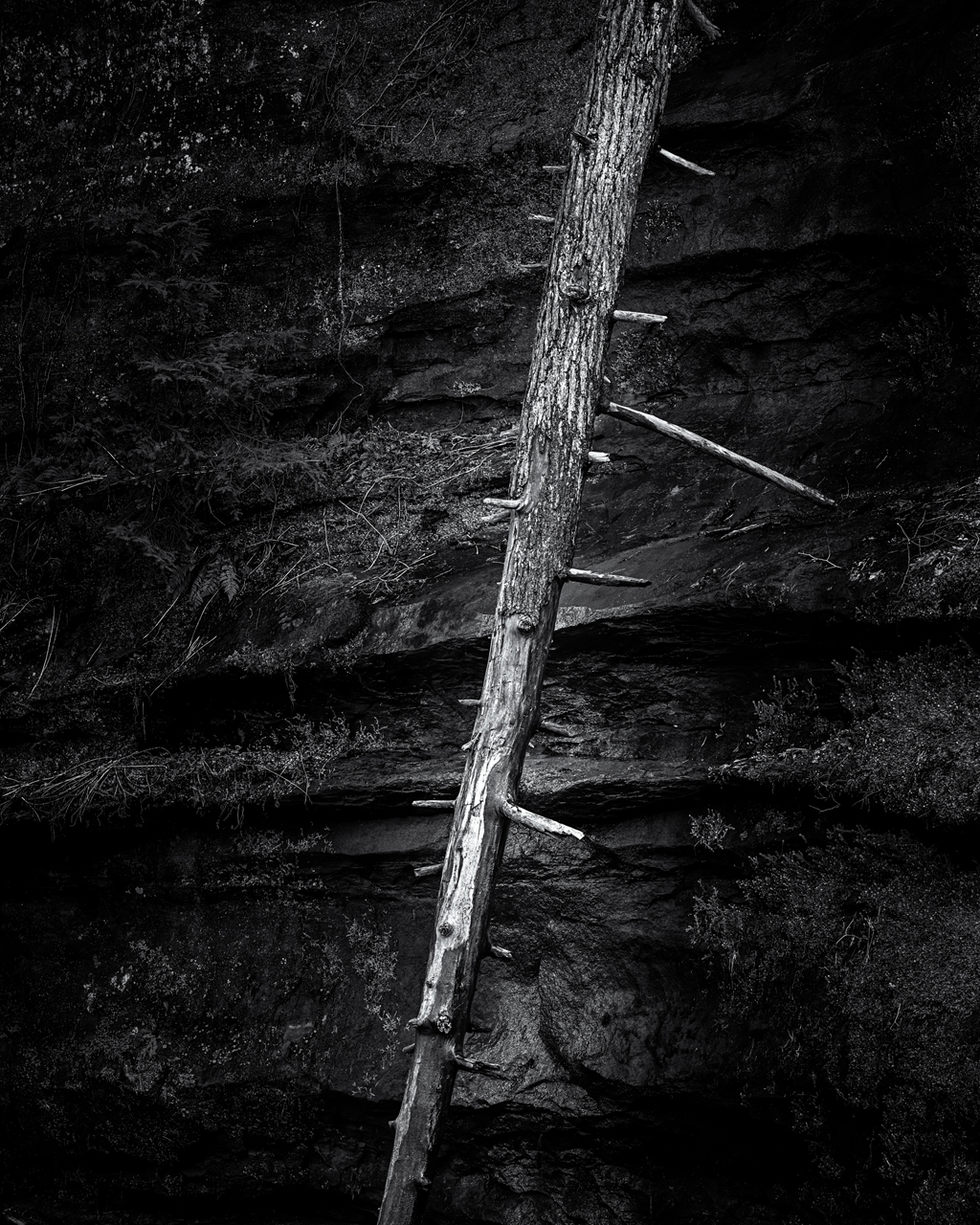
Fallen tree trunk case study of Black and White Nature Photography at Old Man’s Cave trail, Hocking Hills, Ohio by Craig McCord
1. Tonal Separation
The pale trunk contrasts against the dark cliff.
This instantly draws the eye.
2. Texture as Story
Barkless wood, jagged limbs, mossy stone—these textures create narrative in monochrome.
3. Simplified Composition
The diagonal trunk adds structure and energy.
Even without color, the eye knows exactly where to travel.
This approach applies to any scene with strong geometric or tonal relationships.
A Simple Trick to Strengthen Your Black and White Vision
If you shoot digital, set your LCD preview mode or picture style to Monochrome.
This helps you:
- See tonal relationships immediately
- Avoid being seduced by color
- Focus on contrast, form, and texture
But always shoot RAW so you keep all the color data for post-processing flexibility. Your preview will be black and white, but your file will still contain full information.
Conclusion: Learning to See Tonally Changes Everything
Mastering black and white nature photography is not about removing color—it’s about transforming how you see. When you focus on tonal contrast, shape, texture, light, and atmosphere, every landscape becomes a deeper visual experience.
Hocking Hills serves as a powerful example of this approach, but the principles apply everywhere—from quiet local forests to towering mountains to desert canyons.
Slow down. Notice how light touches surfaces. Pay attention to mood. Let texture tell the story. When you look beyond color and concentrate on tone, you unlock a more expressive, intentional way of photographing the natural world—one that creates images with depth, emotion, and timeless character.
About Author Craig McCord

I am a fine art black and white landscape photographer born in 1951 in Jacksonville, Florida. My photographic interests began in the early 1970’s. Over the years, I emersed myself in black and white photography after build-ing my own darkroom in my home basement.
Selections of my work exist in private and corporate collections. In 2016 the National Park Service highlighted my work as part of their centennial celebration and now have several large prints of my work on display in a Missouri regional park headquarters. I recently received recognition in Black and White Magazine, Black Box Gallery, Monovision Photography Awards,